City of

Gatineau

Area Map

Visit the city's website
City's website
City of Gatineau Papineau RCM Collines - de - l’Outaouais RCM Vallée - de - la - Gatineau RCM Pontiac RCM The Outaouais
Detailed version
Detailed version

A brief overview

An exceptional quality of life, with an invaluable balance between sustainable development, accessibility, local services and economic vitality.

Gatineau neighbours the city of Ottawa, in Ontario; together, they form the Ottawa-Gatineau metropolitan area with a total population of 1,323,783 people, making it the fifth largest metropolitan area in Canada (after Toronto, Vancouver, Montréal and Calgary).

Fourth largest city in Quebec, it is the province’s second immigration hub.

With a population hovering around 300,000 people, Gatineau houses more than 70% of the Outaouais’s residents.

The City of Gatineau is made up of five major sectors and includes 19 districts.

It is located at the border of Ontario and the federal capital.

Its total land area is 381 km2.

Why study here?

Education to fit everyone’s needs

Gatineau is home to multiple renowned higher education institutions, offering a wide variety of programs in French and in English. The Université du Québec en Outaouais (UQO), the Cégep de l’Outaouais, Heritage College and the National Autonomous University of Mexico campus make it a stimulating academic environment rooted in its community.

The new McGill University Faculty of Medicine satellite campus inaugurated in fall 2020 at the Gatineau Hospital has helped reinforce local healthcare services and positions the city as a hub for medical innovation.

Collaborations between educational institutions and local businesses help ensure a smooth transition into the labour market.

A window on the world

Gatineau offers a learning environment that fosters both French and English language acquisition, an invaluable asset when navigating the job market.

Facilitated academic exchanges with Ottawa and other Canadian and international learning institutions, paving the way for diverse and global career paths.

A lively living environment

Quality of life that makes the city a perfect place to learn and grow. Gatineau was ranked as one of the best Canadian cities to work in for young people in 2024, and it attracts a dynamic student population.

Between cultural events, concerts and active student unions, young people can fully thrive in a lively environment, both through their studies and their social life.

Why live here?


Everyone can find their place

Gatineau is an inclusive and humane city that looks to the future, creating sustainable and dynamic living environments to help its citizens thrive.

Residents are kept busy with the variety of cultural, artistic and sports events on offer, fostering a rich and active social life for people of all ages.

The population’s cultural diversity is what creates the richness of the city’s neighbourhoods. Here, everyone can naturally fit into a vibrant, welcoming community that takes pride in its many origins.

Between city energy and the calm of nature

Gatineau offers an harmonious blend of city excitement and the natural serenity of an exceptional living environment. This unique closeness between urban and rural life makes the city a prime choice for its outstanding quality of life.

With more than 365 parks and four rivers, including the majestic Outaouais River, nature is everywhere around Gatineau. Residents benefit from a privileged access to vast natural spaces where they can relax, have fun and get active.

The city’s modern infrastructure helps foster inclusive participation in a wide variety of recreational, cultural and sports activities through the whole year.

Discover infinite opportunities

A dynamic job market offering one of the highest average and median incomes in Quebec, with a diversified job pool, notably due to the proximity of government institutions, technology businesses and expanding industries.

Its growing economy is built on the strong foundation created by the cybersecurity, digital identity, manufacturing and construction sectors, among others. These innovative industries offer exciting possibilities and strengthen Gatineau’s position as a major economic hub.

Why invest here?


An expanding world

The city of Gatineau plays a key role in linking the two Canadian provinces with the largest GDP per capita. The city’s proximity to the American border also makes it a trading hub for international commerce.

Gatineau is an essential destination for business tourism and is a perfect host city for a variety of conferences and business events, thanks to its well-adapted and easily accessible infrastructure.

The right place at the right time

Due to its proximity to major markets and its access to policy-makers, institutions, government clients and a large highly educated bilingual labour pool, Gatineau is a prime strategic location at the centre of the action.

Its advantageous geographical position, combined with the presence of major highways, railways and airways in the region, make it a natural gateway for businesses looking to grow and shine beyond Quebec.

We help you grow

Entrepreneurship is stimulated through a wealth of resources available in the ecosystem such as fiscal incentives, support from local authorities, incubators, accelerators, and research centres that can all help guide entrepreneurs through ever step of their development.

Why visit us?

Take a deep breath of fresh air

The Gatineau experience includes a wide range of activities available throughout the year: cross-country skiing, hiking, sliding, kayaking, cycling… There’s a playground for everyone.

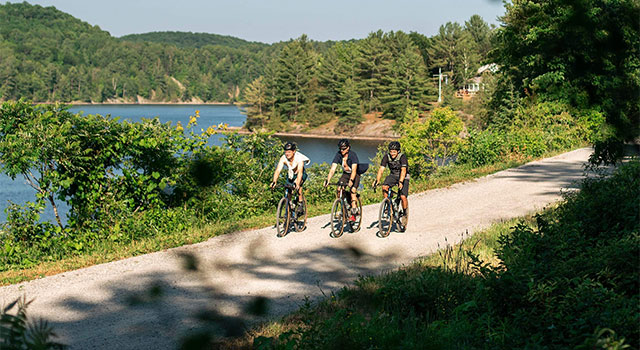
The city’s 350 km of bike paths and trails meander through the downtown core and urban areas, while also leading to many parks and green spaces.

Renowned spas and wellness centres round out the offer, allowing visitors and residents alike to relax in a peaceful and reinvigorating environment.

A food and cultural scene to be discovered

Gatineau moves to the beat of its culture all year long. The Canadian Museum of History, the most visited institution in Canada, is surrounded by art galleries, theatres and venues. The Culture Trail winds through various public works of art, street art, and heritage sites that encourage people to discover or rediscover the downtown core every summer.

A dynamic food scene with appealing award-winning microbreweries, creative restaurants and a local food offer prized by passionate craftspeople.

A rich and varied cultural life that includes dozens of major festive events throughout the year, including the famous Gatineau Hot Air Balloon Festival.

A real gem with multiple facets to discover

Gatineau impresses by its ability to combine nature, culture, gastronomy and urban life on one territory. Whether you are a thrill seeker, a history buff or simply looking for a good time, the city has something to offer you.

Each neighbourhood has its own personality, from the lively and creative Vieux-Hull, to the coastal Aylmer sector, all the way through the historical and nature-rich Gatineau and Masson-Angers.

Did you know?

For more information,
visit: gatineau.ca

Gatineau stands out as the 8th best city in Canada to raise a family in and one of the best cities for young Canadians to work in.

L’Orchestre symphonique de Gatineau is a symphony orchestra founded over 18 years ago, comprised of 60 musicians and conducted by Yves Léveillé.

Located in Gatineau, the Canadian Museum of History is one of the most visited in Canada, seeing more than 1.2 million visitors annually. Its iconic architecture was designed by Canadian architect Douglas Cardinal.

The Salle Odyssée stage of the Maison de la culture venue has received the most awards in Quebec. It is the recipient of 12 Félix awards and 3 Olivier awards for “Performance hall of the year.”

Gatineau hosts around thirty sports events every year, including the Tour de Gatineau, a cycling competition that attracts over a hundred elite cyclists.

The city offers 165 km of walking paths and more than 200 maintained cross-country ski trails. Gatineau Park is one of the largest networks of paths and trails in North America.

Questions

What Is the City of Gatineau and How Does It Differ From Other RCMs in the Outaouais?

More Less

The City of Gatineau corresponds entirely to the territory of the City of Gatineau. It differs from other RCMs in the Outaouais in that it is made up of a single municipality, which assumes both municipal responsibilities and the regional powers typically assigned to RCMs.

Its territory includes the sectors of Aylmer, Hull, Gatineau, Buckingham, and Masson-Angers, resulting from the 2002 municipal merger. This unified structure gives Gatineau expanded capacity for regional planning and management.


Where Is the City of Gatineau Located?

More Less

The City of Gatineau is located in the southern part of the Outaouais region, along the Ottawa River and directly across from the City of Ottawa. It is the main urban centre of the region and a major hub for services, institutions, and economic activity.

Thanks to its strategic location, Gatineau serves as a gateway to Quebec from the federal capital and lies at the heart of the Outaouais region’s main transportation and institutional corridors.

Which Sectors Make Up the Territory of the City of Gatineau?

More Less

The territory of the City of Gatineau is structured into five main sectors: Aylmer, Hull, Gatineau, Buckingham, and Masson-Angers.

Aylmer stands out for its heritage character, river access, and residential neighbourhoods. Hull includes the downtown core as well as several national institutions and cultural venues. The Gatineau sector forms a large and rapidly growing residential and commercial hub. Buckingham and Masson-Angers retain a village-like identity while benefiting from the services of a modern city.

Each sector has its own services, schools, parks, natural areas, and economic hubs.

How Many People Live in the City of Gatineau?

More Less

The City of Gatineau has a population of 291,041 according to the 2021 census. It is the fourth-largest city in Quebec.

The population has experienced moderate growth since 2016. Gatineau is home to a diverse population, making it a dynamic and attractive urban environment.

What Is the Most Commonly Spoken Language in the City of Gatineau?

More Less

French is the most widely spoken language in the City of Gatineau. According to the 2021 census, 77.1 percent of residents use it most often at home. English is also very present, and many residents use both languages in their daily lives.

The city is home to several cultural communities, which contributes to its linguistic diversity, and many municipal services are offered in both French and English to meet the needs of the entire population.

How Can You Get Around the City of Gatineau?

More Less

The City of Gatineau has an extensive road network that connects its various sectors and provides direct access to Ottawa through several interprovincial bridges. Public transit is provided by the Société de transport de l’Outaouais, whose bus network is organized around the Rapibus corridor.

Cycling also plays an important role thanks to numerous bike paths. However, the car remains the most commonly used mode of transportation for travel between sectors and to neighboring municipalities.

What Are the Main Tourist Attractions in the City of Gatineau?

More Less

The main tourist attractions in the City of Gatineau include downtown Hull, the Canadian Museum of History, and the banks of the Ottawa River, where visitors can enjoy trails such as the Voyageurs Pathway and the Ruisseau-de-la-Brasserie Trail.

Visitors also enjoy popular parks such as Lac-Beauchamp Park, Parc de la Baie, and Moussette Park, as well as the city’s immediate proximity to Gatineau Park for outdoor activities.

What Outdoor Activities Can You Enjoy in Gatineau?

More Less

Gatineau offers many outdoor activities thanks to its parks, public beaches, nature trails, and cycling paths. The Ottawa River and inland rivers allow for canoeing, kayaking, stand-up paddleboarding, and other water-based activities.

In winter, the city features skating rinks, snowshoeing trails, cross-country skiing paths, and tobogganing areas. The nearby Gatineau Park also provides opportunities for hiking, mountain biking, and skiing.

What Are the Key Economic Sectors in the City of Gatineau?

More Less

The economy of the City of Gatineau is based on several key sectors. The federal public service is one of the region’s main employers and attracts a large workforce. Professional services, retail, technology, education, and health care also play an important role in the local economy.

Population growth supports the development of the construction and real estate sectors, while local businesses in food services, tourism, recreation, culture, and retail contribute to the vitality of neighborhoods and service hubs.

What Is Daily Life Like in the City of Gatineau?

More Less

Daily life in the City of Gatineau combines the advantages of a large urban centre with access to a diverse natural environment. Residents benefit from comprehensive public services, sports facilities, parks, libraries, community centres, and family-oriented activities.

Each sector of the city has its own distinct atmosphere, ranging from quiet neighbourhoods to more vibrant areas. The presence of shops, schools, public transit, and municipal facilities contributes to a practical and accessible lifestyle.

What Education Services Are Available in the City of Gatineau?

More Less

The City of Gatineau offers a full range of education services. It has many public and private elementary and secondary schools, both French and English, as well as several vocational training centres.

For post-secondary education, the city is home to Cégep de l’Outaouais, Heritage College, and the Université du Québec en Outaouais, which offer a wide variety of programs. Proximity to Ottawa also expands study options for residents.

What Health and Social Services Are Available in the City of Gatineau?

More Less

The City of Gatineau has an extensive network of health services, including CLSCs, medical clinics, dental services, pharmacies, and psychosocial support services. The Gatineau and Hull hospitals provide emergency care, specialized services, and inpatient care.

Services for families, seniors, newcomers, and people in vulnerable situations are also available through the many community organizations operating in the area.

How Does Governance Work in the City of Gatineau?

More Less

Governance in the City of Gatineau is carried out by the Gatineau City Council, which combines municipal responsibilities with those typically held by an RCM. The council plans territorial development and manages services such as urban planning, environmental protection, public safety, infrastructure, and residual materials management.

The mayor also assumes a role equivalent to that of an RCM warden by representing the territory at regional and governmental levels.

What Major Projects or Priorities Are Underway in the City?

More Less

The City of Gatineau is focusing its priorities on sustainable urban planning, improving public transit, modernizing infrastructure, and protecting natural environments. Enhancing waterfront areas, increasing access to parks, and developing complete neighbourhoods are also key ongoing priorities.

The city is also pursuing projects related to active transportation, cultural development, support for the local economy, and adapting the territory to population growth.

Why Choose to Settle or Invest in the City of Gatineau?

More Less

The City of Gatineau is attractive for its balance between a complete urban environment and easy access to nature. Residents benefit from a wide range of services, modern infrastructure, green spaces, and direct access to Ottawa.

From an economic perspective, the presence of public institutions, job diversity, and the strength of professional and commercial sectors create a favorable environment for families looking to settle and for business development.


Vivre en
Outaouais
Étudier en
Outaouais
Investir en
Outaouais
Voyager en
Outaouais